
Having played Red Dead Redemption 2, you could say I’ve pretty much lived in the Wild West. I know its dangers, its people, its wildlife, and how hard it is to go to the local saloon without getting shot. I consider myself something of an authority on the subject. So what if I’ve never ridden a horse anywhere more dangerous than a supervised trail in someone’s backyard?!
Naturally, I was very interested in Dust in the Wind from Phalanx Games, which is a Wild West game with a capital cursive W. And having played through the prototype they sent me, I like this thing a lot.
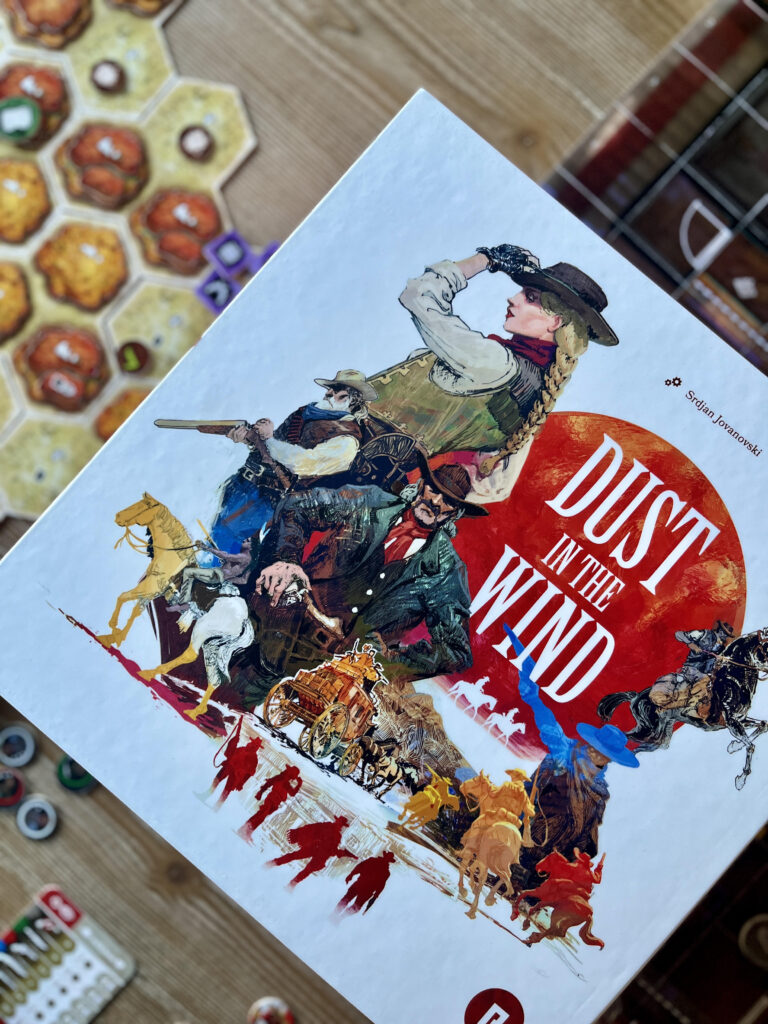
It’s a cooperative narrative adventure set on the American frontier, in which you take control of a little group of characters with a few dollars in their pockets, a revolver or two, and some gumption (I can never decide if I like that word or not). There’s open-world exploration, tactical combat, a fair bit of reading, and an enormous amount of Western flavor. I’ve always suspected that a Michelin chef is just a man who’s not afraid to use more butter than you, and I think Phalanx has taken a similar approach here. There is western stuff absolutely everywhere.
The preview copy includes four scenarios, while the core game will have twelve with various branching paths. That amount sounds just right to me. I’ve been playing The Elder Scrolls, which has approximately enough content to occupy me until the Second Coming, and while I appreciate getting my money’s worth, I also appreciate the possibility of actually finishing a campaign. Twelve scenarios, with replayability depending on your choices, sounds pretty reasonable to me. For reference, the three scenarios after the intro each took me about 2.5-3 hours to complete, although I really have no idea how long others will take.
Anyway, you begin with a seemingly simple job delivering a mysterious parcel for a man named Jett Lucas. I’m sure you can guess how that goes. Before long you’re in some deep trouble, and after the introductory scenario, you’re off to Arizona to find work, make some money, and put some distance between yourselves and the people who would like to see you dead.
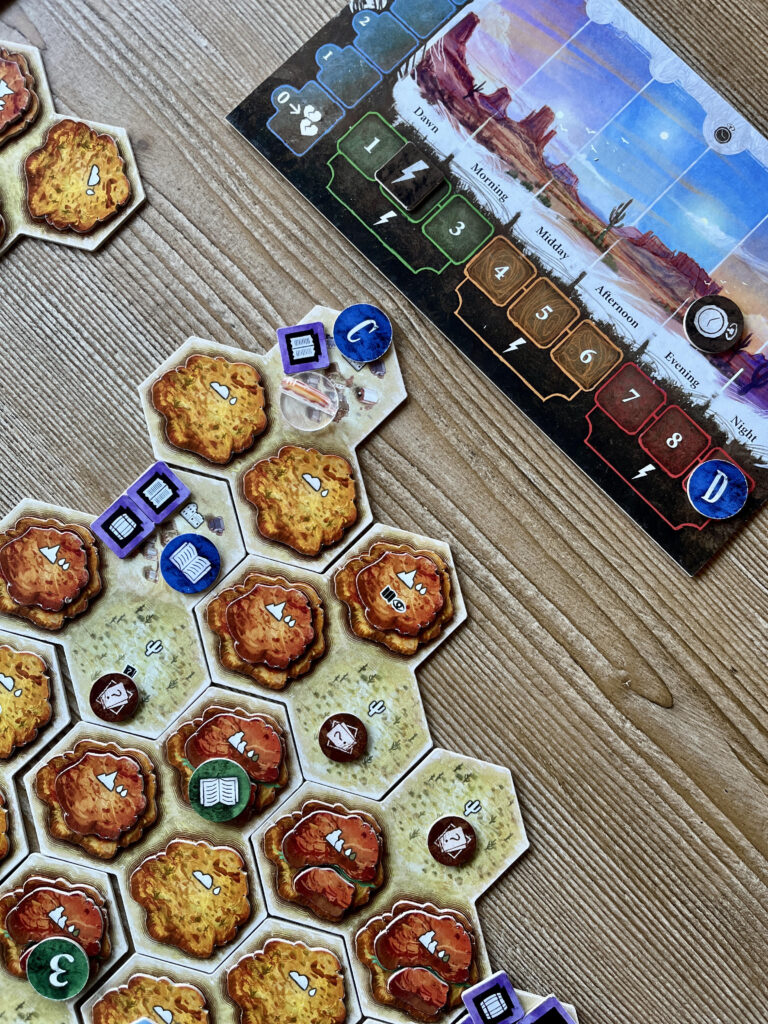
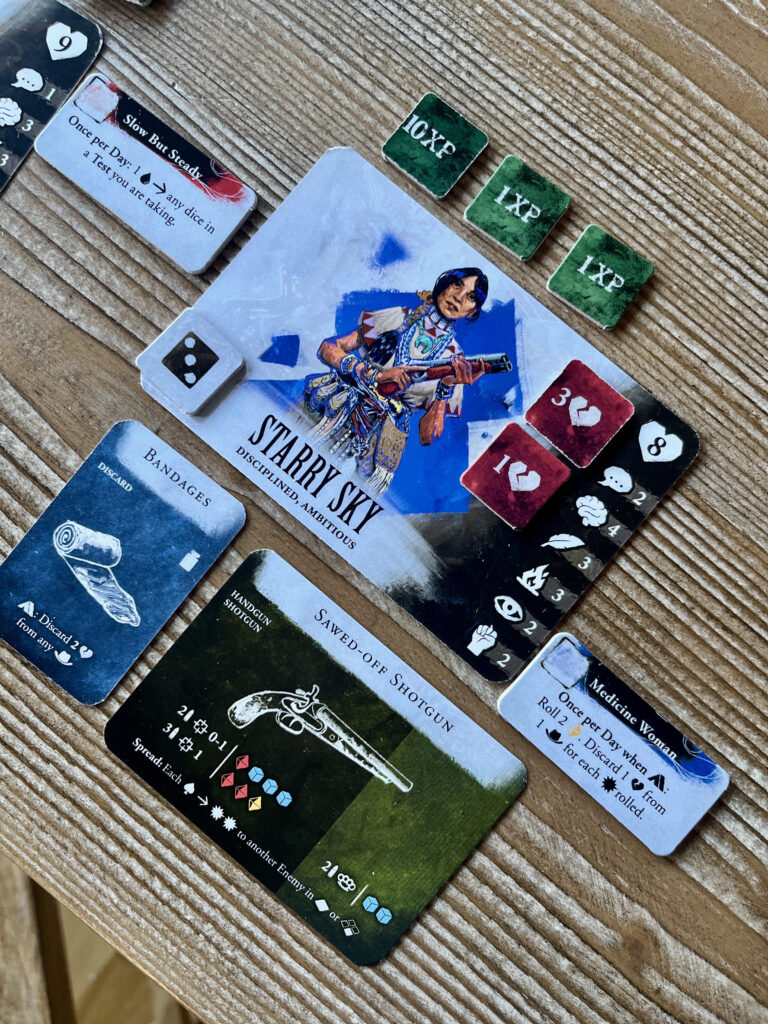
This is where things really open up. You explore a map that gradually reveals itself as you travel, discovering towns, encounters, and all sorts of interesting things along the way. You have to manage your water supply, keep track of time, and contend with a threat level that can make things much worse in combat. You can stop in towns to buy weapons, visit the doctor, or see what’s happening in the saloon. Characters can pick up injuries that follow them between scenarios, and they’ll earn experience to spend on new abilities.
You’ll also be doing plenty of trait testing, which reminds me a bit of Arkham Horror: The Card Game. Characters have ratings in things like Charisma, Perception, and Willpower, and you’ll roll four dice, hoping for enough successes to pass. These tests come up frequently during encounters and story decisions, with the results helping determine what happens next.
There’s a lot going on here, but it’s not that difficult to grasp once you’re playing. And the exploration is great. I wanted to investigate everything. However, all scenarios in the prototype have time limits that can be a bit restrictive. I actually do think the timer is necessary, particularly when you’re supposed to be doing something urgent, but I was a little disappointed by the encounters I had to pass up. You’ve gone to all this trouble to make me curious about your world, Phalanx, and now you’re telling me to hurry up!
But the big draw here is the story, and I’m happy to report that the writing is good so far. Games like this live and die by their writing, and Dust in the Wind absolutely lives by it, from what I’ve been able to preview.
It lays out its setting well, with its dusty towns and dubious characters. I was surprised by just how much I enjoyed reading it all. There are some games where I find myself impatiently skimming the narrative bits to get back to playing the game, which probably actually says something about my gnat-like attention span, but that hasn’t been the case here. I want to know what happens next!
And I think a big part of that is how much influence you have over the story. The game makes a point of advertising its moral choices, and I was interested in seeing how well it handled them. I’ve been thinking lately about why people choose to be bad in narrative games, because I have an awfully hard time bringing myself to do it. I played Arthur Morgan as probably the kindest criminal in the history of the American West. But Dust in the Wind does succeed at making some of these decisions difficult. You might want to do the right thing, but doing so might cost you money, time, or more. But, of course, if you’d rather be a proper outlaw, the game happily accommodates you.
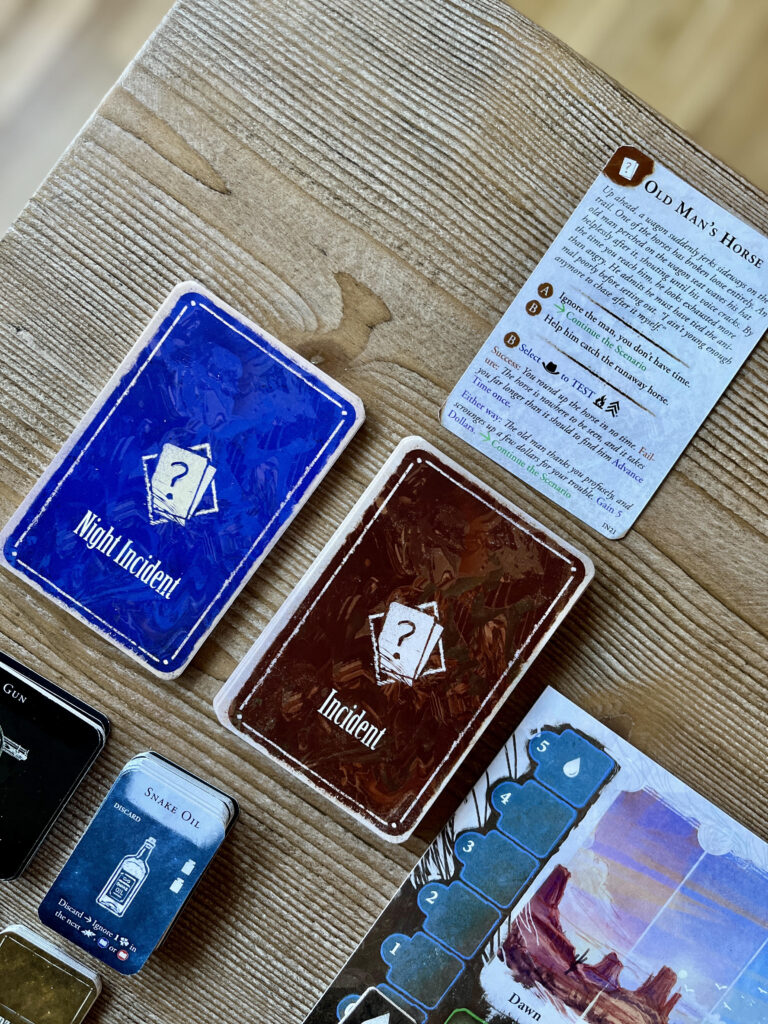
There’s a little encounter where you come across an old man who’s lost his horse. You can stop and help him, or carry on with whatever business you’ve got. Now, I don’t think anyone is going to lose much sleep over this particular moral dilemma, but suppose you’re running out of time and water, and you really do need to get somewhere. It’s a little harder to be generous when you’ve got your own problems to worry about. Of course, the old man might give you $5 for your trouble, which is nice and I wish more people would consider it when asking me for favors.
Your choices can affect your reputation and the direction of the story, and there are also four different Motivations you can pursue, involving fame, fortune, honor, or gunfighting… it’s the wild west after all. You don’t have to commit to one at the beginning, but can use it as a guide through story choices. Your achievements are used to determine different epilogues at the end of the campaign. I really like this idea, especially the possibility that you might begin with one ambition and wind up with a different reputation by the end.
In fact, I feel more personally involved in the story here than I did in Sleeping Gods, which I was fairly meh on. It felt like I was just reading stories that already existed in the world. Dust in the Wind has made me feel more responsible for the direction things are taking. It’s kind of a difficult distinction to explain, but it’s made a considerable difference in how invested I am.
Now, I haven’t even mentioned combat yet, which is quite a substantial part of the game. In fact, this is something of a dungeon crawler that’s escaped from the dungeon, and THANK GOODNESS. I’ve got nothing against dungeons, but I think I’ve spent quite enough of my gaming life stumbling around in those dingy, damp places. It’s nice to get outside occasionally, even if that fresh air comes with the possibility of being shot.
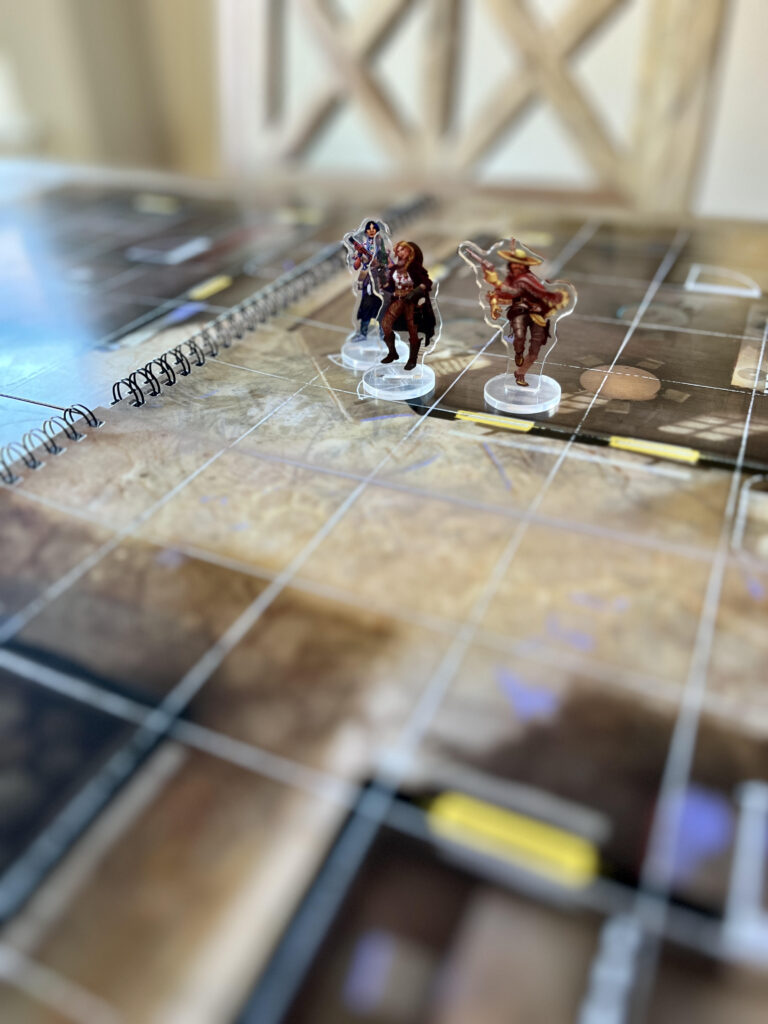
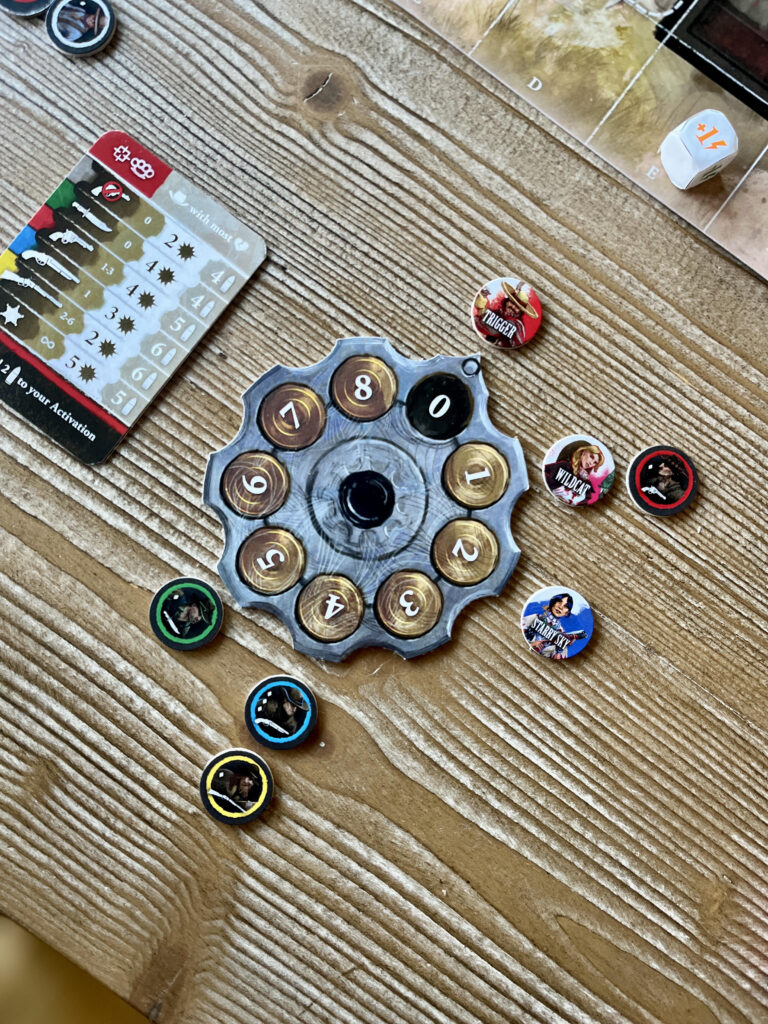
Combat takes place on tactical maps formed by opening two spiral-bound books to the appropriate pages. You move around a grid, taking cover, firing weapons, and using character abilities. There’s a rotating action cylinder, designed like a revolver chamber, that determines when everyone activates. Different weapons have quick and aimed fire modes and enemies behave according to combat cards. Positioning is a big part of it. There’s a good amount of tactical consideration, and I like that it feels like an actual combat game instead of a little dice-rolling moment between chapters of the story.
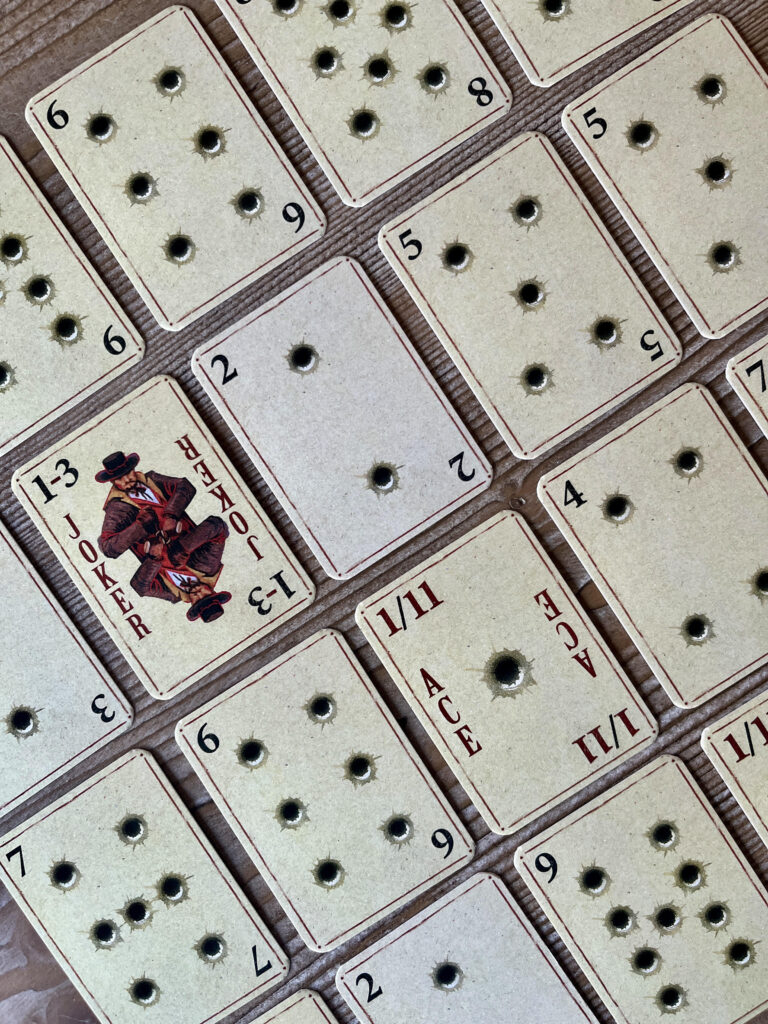
And then there are the duels, which use a modified deck of playing cards and a Blackjack-style system where you’re trying to get closer to 21 than your opponent without going bust. I loved this. Of course you should be settling your revolver duels with playing cards! Why has nobody made me do this before? It makes complete sense that when you’re gambling with your life you should use the same mechanism you might have used to gamble away your money at the saloon.
I think that’s one of the better things about Dust in the Wind. The individual mechanisms are interesting enough, but together they do an excellent job of making the game feel like a Western.
There are a few things I’d like to see improved before publication. The tutorial gets you playing right away, which I love, but I still spent a fair bit of time hunting through several rulebooks for answers. It’s not as clear as it could be. Some story details didn’t quite add up either, and enemy attack priorities left us guessing more than once. All things I hope get ironed out.
This is maybe a personal preference, but I’d also love to see more classic card game-based mechanisms like the Blackjack duels. This was the most unique and clever piece of the game. I know poker-inspired games are having something of a moment, but I’m certainly not tired of them, and I’d happily take more of that here.
Overall, we found the game to be slightly on the easier side, at least in the four scenarios we played. We failed plenty of trait tests and had a few moments where items like Snake Oil came to our rescue, but we managed to get through everything without losing a character. I’m curious whether that changes as the campaign goes on.
Regardless, I like this game a lot. I’ve only seen four of the twelve planned scenarios, but I’m eager to find out what happens in the next town and where our adventures take us. It’s been a terrific introduction.
I’d like to think that by the end I’ll have earned a reputation as some great legendary outlaw of the West, although knowing how I played Red Dead Redemption, I’m assuming my conscience will once again be a terrible hindrance to my criminal career. Fortunately, there are always old men who need help finding their horses. Whatever sort of legend I end up making of myself, I’m looking forward to it.