
I remember reading The Magic Tree House books when I was a kid. I have a memory of laying on my bed with a small tower of those books teetering next to me, loving every minute I spent inside their worlds. And because history has a habit of repeating itself, my four year old is now at the age where she’s deeply engrossed in the stories of Jack and Annie.
Those books, while not perfect, did understand something pretty important about children, which is that the impossible really doesn’t need defending if the adventure is good enough. A tree house can travel through time? Fine. Where are we going?
Anyway, those books were maybe the first conscious thought I had about “using my imagination.” It gives you an impossible premise and takes it seriously. Love that. We’re in ancient Egypt now, we have more pressing matters than how the treehouse got here.
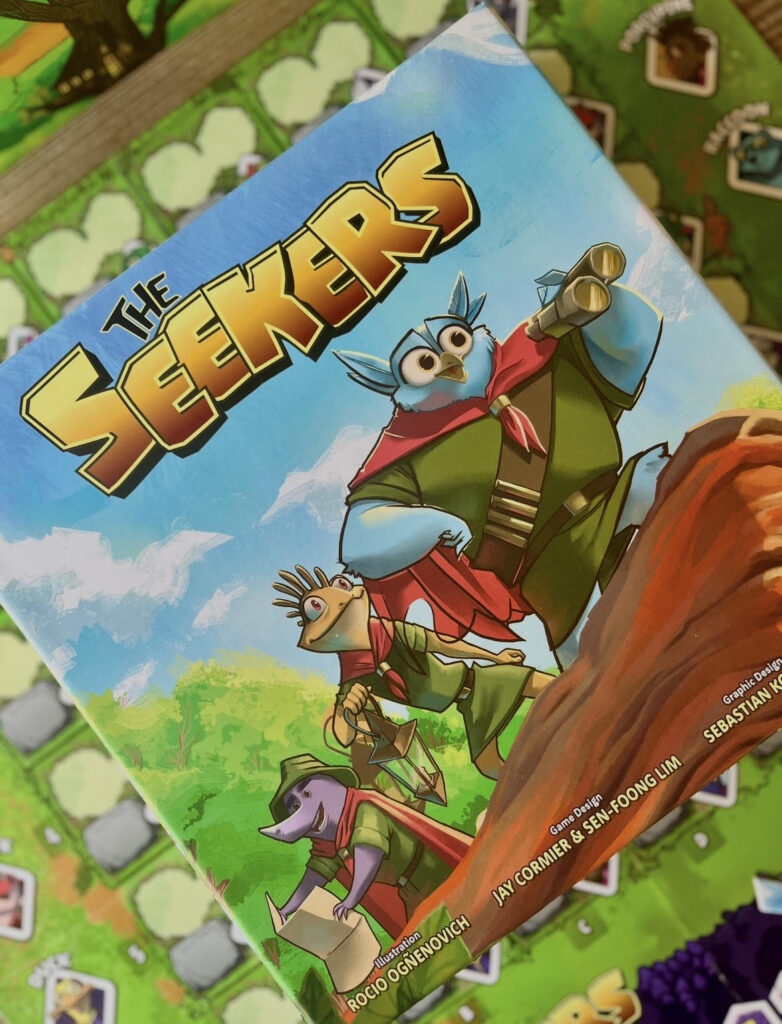
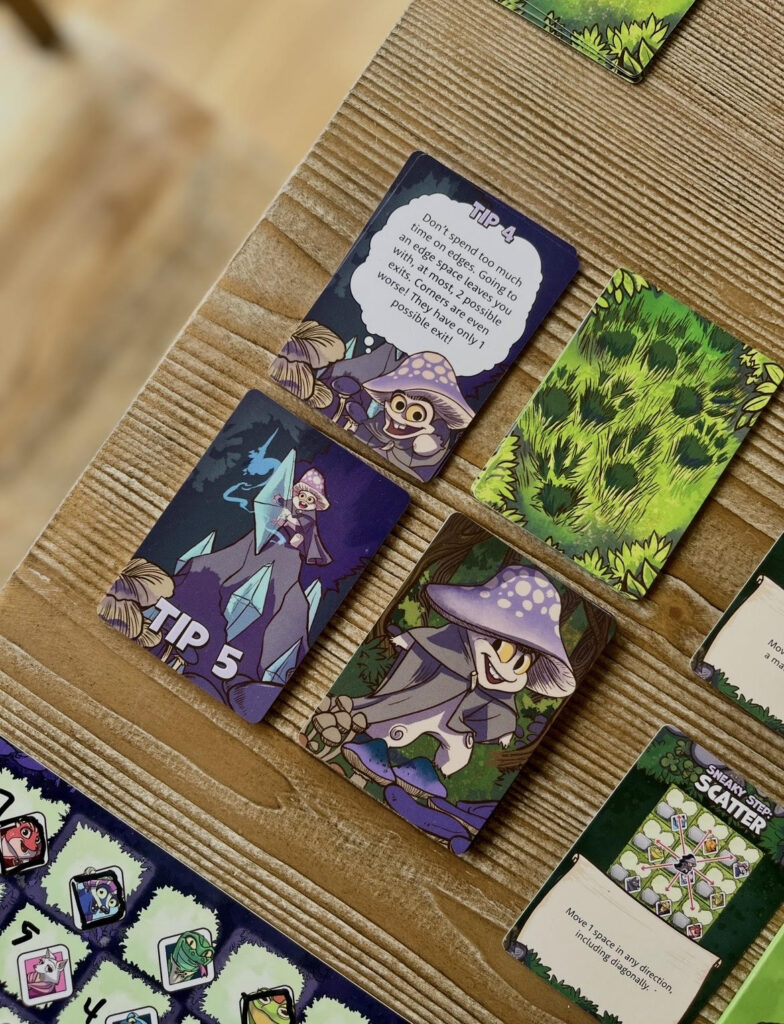
The Seekers, from Off the Page Games Unbound (their new line of games unrelated to comics!), kind of taps into something similar here. This time that impossible thing is a mushroom sneaking through a forest collecting Crystals while a bunch of other critters try to stop him. Why? They tell you why but to a kid that’s less important than “Which way did he go?!?”. It’s also a particularly nice way to introduce them to one of my favorite board game mechanisms: hidden movement.
One player is the Mushroom, secretly moving around a 6×6 forest and collecting eight Crystals. Everyone else is a Seeker, trying to reconstruct the Mushroom’s hidden path from the little bits of information it is forced to leave behind.
The Mushroom has a private board hidden behind a screen. It chooses a starting space, secretly marks four randomly chosen Animal types that contain the precious Crystals it must collect to win, and then begins moving. Every step is recorded, creating a hidden trail that only the Mushroom can see.
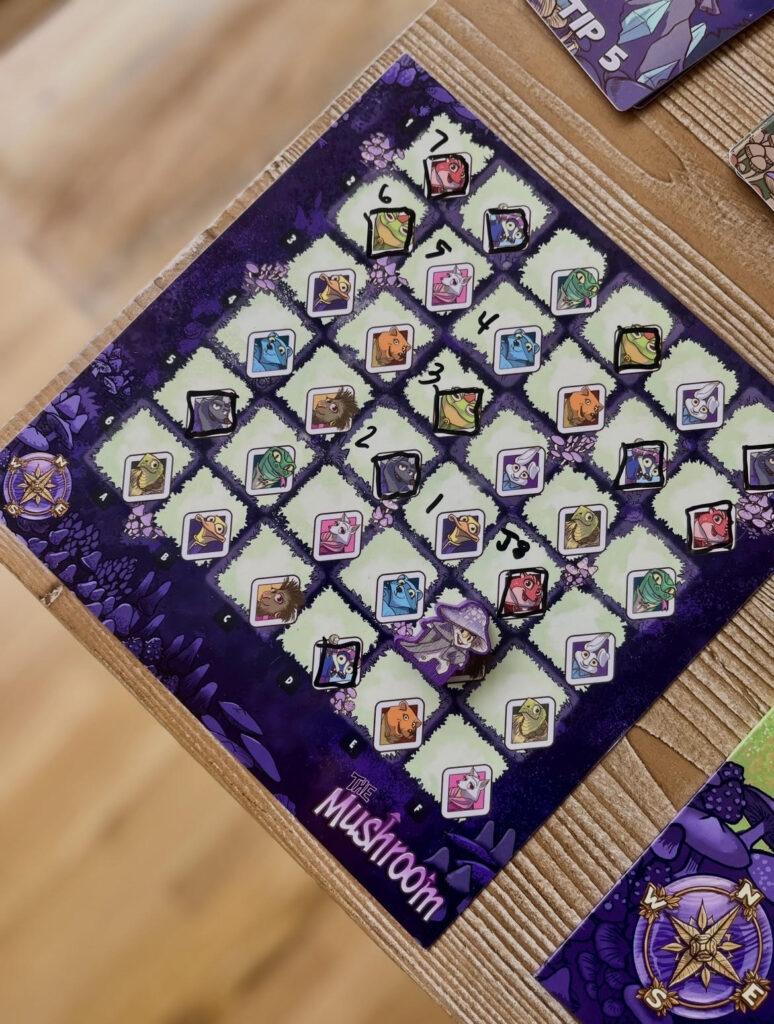
The Seekers see the forest, but not the mushroom moving through it. So right from the beginning they need to do half deduction and half imagination, building a picture of what’s happening just out of view.
The Mushroom normally moves one space at a time, north, south, east or west, never finishing its movement on a space it has already visited. But it also has two Sneaky Step cards that allow it to do things a regular old mushroom shouldn’t be able to do: jump to another matching animal, move diagonally, glide along an entire row, or otherwise slip through the forest in ways that make the Seekers’ deductions a bit more complicated.
After the Mushroom moves, the Seekers get their turn. They can move their figures, use their individual powers and one-use Badge cards, and, most importantly, Search.
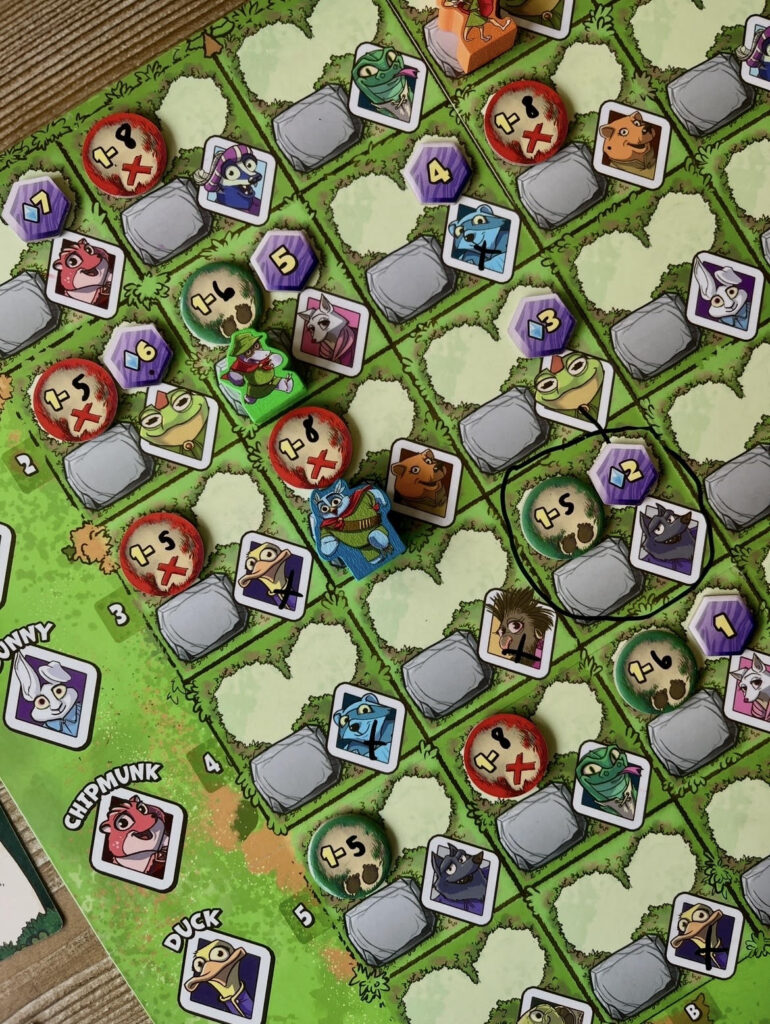
Searching gives the Seekers information about all three spaces bearing that animal. The Mushroom must mark each with a Step token indicating whether it has visited one of those spaces, along with the current step number. So perhaps the Mushroom has visited the frog, but somewhere between Steps 1 and 5. Perhaps it hasn’t visited the fox at all. Slowly, you fill the forest with evidence.
The Seekers can also place Path tokens to construct their theory of the Mushroom’s route, moving and rearranging them as new information comes in. This detective work is tricky but creative and fun.
It’s such an approachable entrance into hidden movement for younger players. There’s an adventure happening on both sides of the little screen: the Mushroom is off on its secret little quest, while the Seekers work together to chase the trail, piece together the clues, and hopefully catch it in time.
My children are not old enough to play this yet but it’ll be wonderful to play with them in a few years. The age limit on the box is 8+, which feels about right, maybe plus or minus a year depending on your child. It’s not exactly dead simple, especially with some of the random elements (cards drawn) and the Sneaky Step cards. I think it could present a real challenge, but it’s a very compelling game.
But the other genius move in this game is the inclusion of something called “Shift cards”. Basically, if you lose a game, you can draw a Shift card to use for the next game. They are intended to help shift the balance as necessary for the game, giving either the Mushroom or Seeker players a leg up as needed. This is GREAT for kids, especially kids of differing ages!
Now if you or your kids veer the opposite way and need more of a challenge or shakeup, the expansions are definitely the way to go. The Fun Gals expansion adds movable Fun Gals (other little mushrooms) with special abilities that can alter movement, hide information, and create new ways for both the Mushroom and Seekers to manipulate the board.
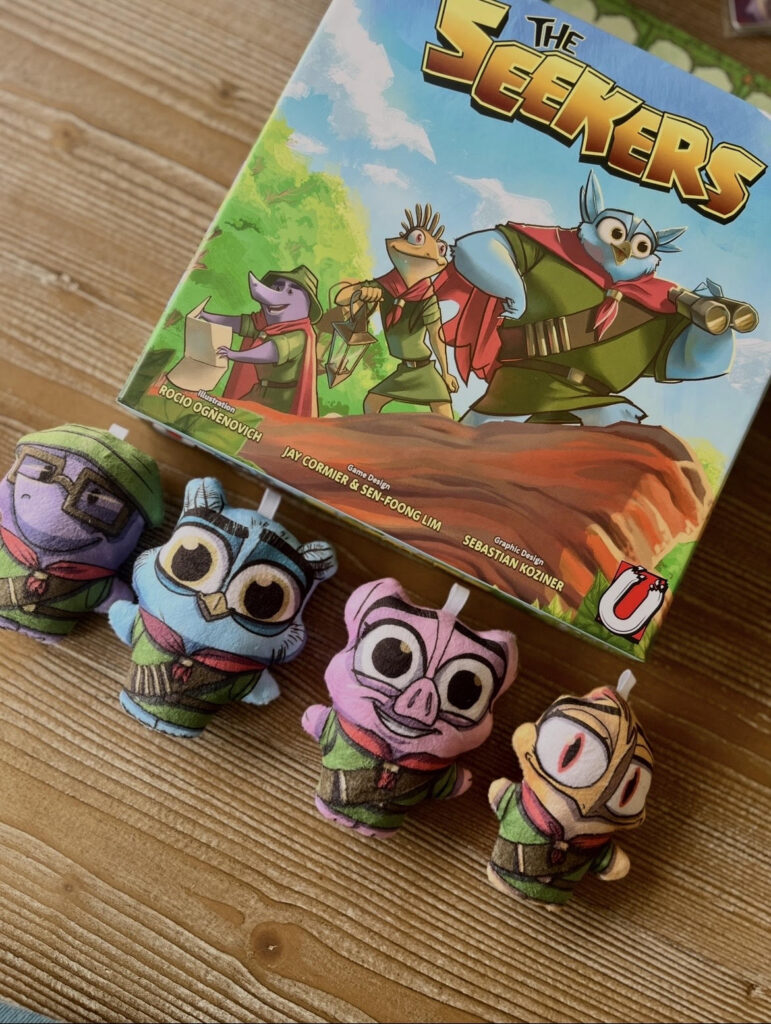
The Shiny Stuff expansion gives Seekers the option to trade some search information for special item cards that provide extra clues and abilities. Including optional magnetic plushies…making the items huggable was definitely a good move.
The whole game is great. You’re taking a handful of simple pieces and turning them into a story that’s a little different for everyone every time. But you’re also solving a logic puzzle at the same time… testing your theories for the Mushroom’s location and changing your story as new clues appear.
And this is one of the things I love about board games. For adults, they keep us on our toes and stave off our dementia. For kids, you get to pair imagination and deduction, but it’s never wearing the dreary clothes of an Educational Activity.
That’s what I first loved about The Magic Tree House, too. Those books gave me a little world to disappear into and invited me to imagine what it might be like living in that moment in time. The Seekers does something a little like that, but this time there’s no author to tell you what happens. A mushroom disappeared into the forest. You have a few clues. Go find it.
Thank you to Off The Page Games for the temporary preview copy.